Dark Pool Scanner
The size that trades away from the lit exchanges, as it reports.
Roughly half of US equity volume never touches a lit exchange. It is matched off-book (in dark pools, at internalisers, in broker crossing networks) and reported afterwards. If you are only watching the order book, you are watching the smaller half of the market.
What dark pool prints are
A dark pool is a venue where large orders can be matched without displaying size to the market first. That is the whole point: an institution moving a meaningful position cannot advertise it without moving the price against itself. Those trades still have to be reported to the consolidated tape, but they arrive as a print after the fact, with no visible bid or offer behind them.
For everyone else, those prints are the only trace institutional activity leaves. A cluster of unusually large off-exchange volume in a name that has done nothing on the lit book is one of the few genuinely early signals available to a retail-sized trader.
What the scanner does
- Live streaming prints: off-exchange trades appear as they report, pushed to your screen rather than polled on a slow refresh.
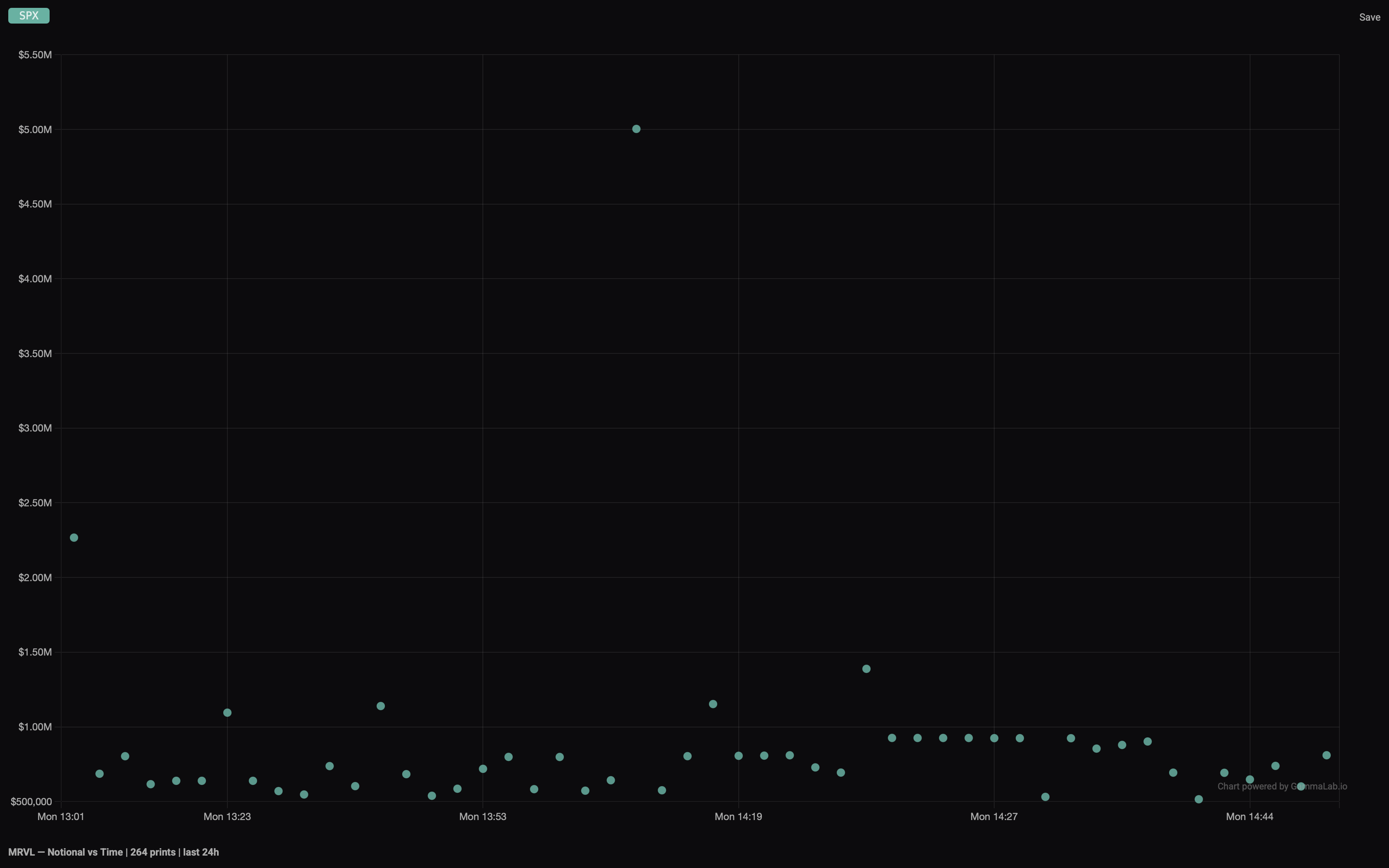
- Size and notional filters: cut the noise and watch only prints big enough to matter.
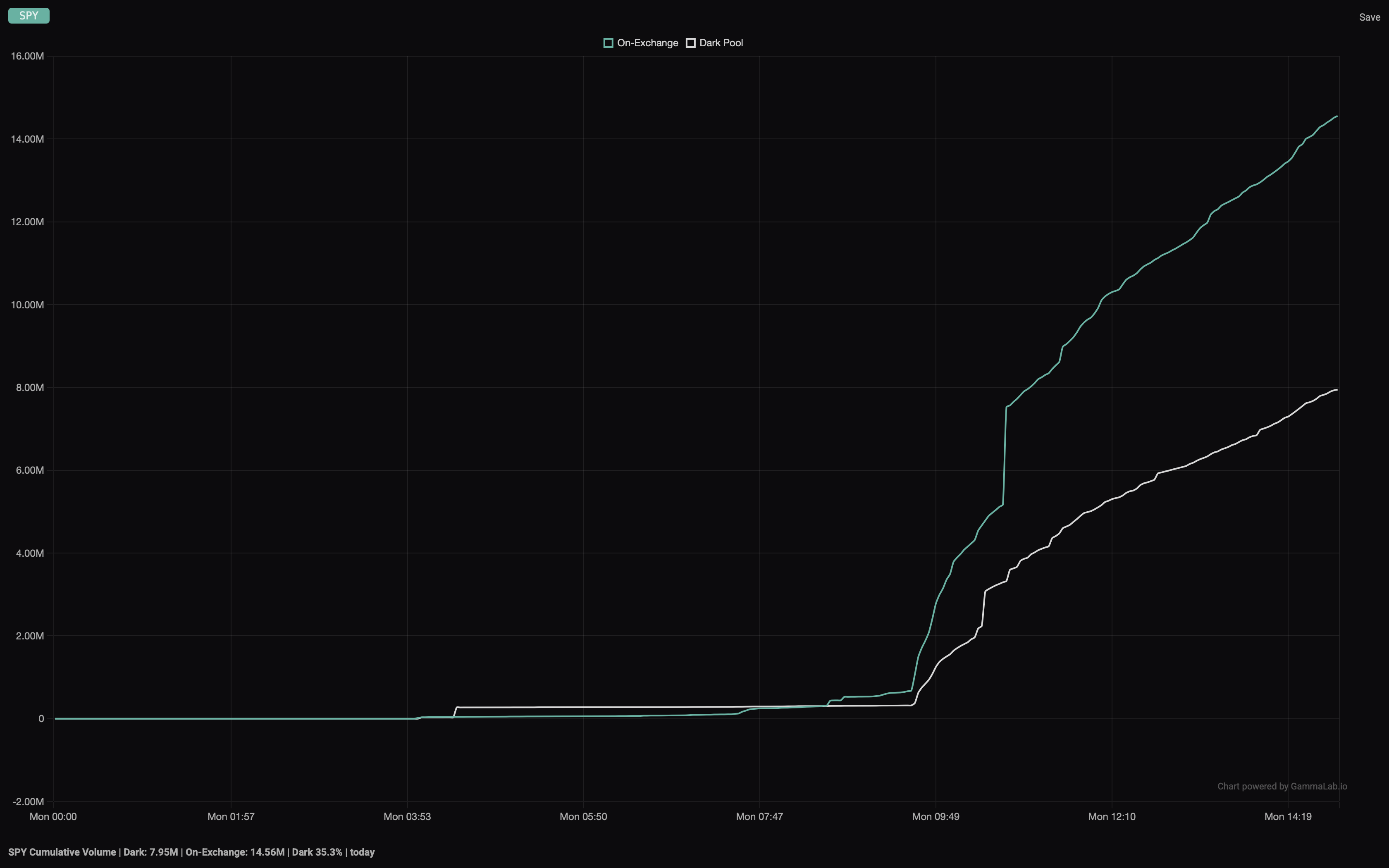
- Dark pool volume per ticker, intraday and as an end-of-day total, so you can see today's off-exchange participation against the name's own normal.
- 30 days of history: the comparison that turns "that was a big print" into "that was the biggest print in this name in a month".
- Charted, not just listed: off-exchange volume plotted over time next to price, which is where the divergences show up.
Read it honestly
A dark pool print does not come with a buyer or a seller attached, and any tool that tells you a block was "bought" is inferring it. GammaLab shows you the print, the size and the venue context, and leaves the direction to you rather than dressing an inference up as fact. What the data supports well is where unusual size is happening, and that is genuinely useful on its own.
How traders use it
The most common use is confirmation. A name breaking out on ordinary lit volume is one thing; the same breakout with three times its usual off-exchange participation behind it is another. The second most common is early warning: sustained heavy dark pool volume in a quiet name often precedes the move rather than following it.
Alongside the whale trade monitor for options and the delta flow monitor for dealer hedging, it completes the picture of large-participant activity: what traded in stock away from the exchange, and what traded in options.